

Airmez Tornado 25K Puffs
In Stock
Original price was: €9.90.€7.60Current price is: €7.60.23% OFF
You save

We ship your order quickly and reliably with
DHL, including
tracking.
The exact delivery time depends on the warehouse status (EU warehouse / international warehouse).
描述
Eight days with the Airmez Tornado 25K: one pod, one flavour, and what this page settles
I keep a device in a jacket pocket for a week at a time and note what actually annoys me about it. The Airmez Tornado 25K puffs is the first one in a while that removed a decision instead of adding one. There is no tank to switch, no second pod to carry, no mode to cycle: 25 ml of one flavour is sealed inside, and the only thing you adjust is the ring at the base. I gave it eight days of ordinary use to see whether that simplicity holds up next to the Fox and Lux models that share its shelf. What follows is every figure written exactly as our own listing records it, how long 25 ml really lasts at three different draw rates, all fifteen flavours sorted into four groups, and — the part this page exists for — how to be certain you are reading about the right “Tornado 25K”, because the name is on four different devices. The Airmez line as a whole is on the Airmez brand page if you want to see what sits above this one.
One thing before the numbers, and it is the least interesting and most useful fact here: this is a one-flavour device. You choose a flavour when you order and you live with it for the whole 25 ml. There is no cartridge to swap and no second chamber, so if you want two tastes available at once, nothing on this page is going to give you that and one of the multi-tank models is the right purchase instead.
“Tornado 25K” is four different devices — here is how to tell this one apart
Search the model name and you will land on pages describing hardware that is not this hardware. The touch-screen Fumot/RandM Tornado 25K takes 20 ml, not 25; the Coolplay Tornado 25K takes 27 ml and a 920 mAh cell; a “RahdM Tornado 25000” 10-pack that is sold as the same device carries ten flavours and a different coil. Reviews of those pages are written confidently and quote the wrong tank size. So before the specification below, the identification table: these are the figures in circulation, in our own reading of the field, and the last column is how you tell them apart without opening a description.
| Variant in circulation | Its headline figures | How you spot it on sight |
|---|---|---|
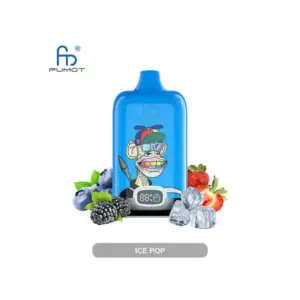
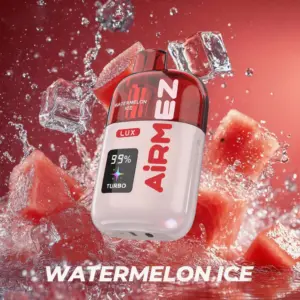
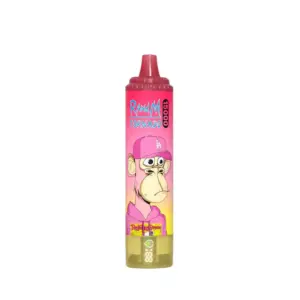
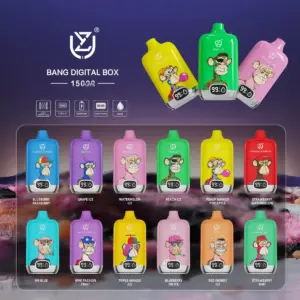
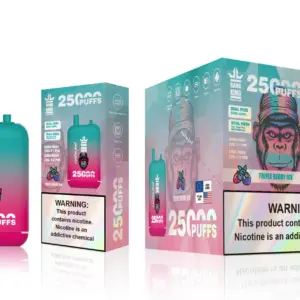
| This one — Airmez Tornado 25K | 25 ml, 850 mAh, dual mesh 0.9 and 1.0 ohm, 5% nicotine salt, 15 flavours | One sealed reservoir, a spinning ring at the base, a small screen showing a liquid ring and a battery figure, and ape artwork over the body |
| Fumot / RandM Tornado 25K | 20 ml, a 700 mAh cell, a 1.77-inch touch screen, three power modes | A large touch panel with mode switching, and no airflow ring at all — the draw is fixed |
| Coolplay Tornado 25K | 27 ml, a 920 mAh cell, auto-vaping Air Turbo | A different chassis entirely, with a mode button rather than a ring |
| Third-party “RahdM Tornado 25000” packs | 25 ml and 850 mAh, but 10 flavours and a single 1.0 ohm mesh coil | Sold in tens, with a ten-flavour list; the flavour count is the giveaway |
| Tornado 15000 / 20000 generations | The same family, a lower draw rating and older hardware | Named with their own number; if the carton says 15000 it is not this device |
The practical test is the base. Our device has a ring you rotate with a fingertip and nothing else; the touch-screen variant has a panel and a fixed draw. If a review you read mentions tapping a screen to change modes, you are reading about the other Tornado and its 20 ml tank.
The ring at the base is the whole interface
This is the part that decides whether you enjoy the device, and it takes about ten seconds to understand. Everything mechanical is at the bottom: a ring that opens and closes the air path into the coil. Turn it one way and the pull tightens and the vapour comes through in a smaller, denser column; turn it the other way and the draw opens up and each pull is looser and larger. Our own write-up settles on roughly half open, which is where the taste and the volume balance out, and it is a reasonable place to start before you decide which way you prefer.
What the ring replaces is a menu. There is no mode button to cycle and nothing to set wrong, which means the device cannot be configured into a state you have to undo. The trade-off is honest: a ring is a physical part and it moves when the device lives in a pocket. Check its position before a session rather than during one, and if a draw suddenly feels tighter than it did yesterday, the ring is the first thing to look at — not a fault, just friction.
The coil behind that ring is listed as a dual mesh pair at 0.9 ohm and 1.0 ohm. Mesh is a flat grid rather than a wound wire, so heat spreads across a wider area instead of concentrating at one point. On a device that has to run through 25 ml without a coil change, that evenness is the whole reason the taste at the end of the reservoir can resemble the taste at the start. It is not a power feature and it does not make the vapour stronger; it makes it consistent.
The first two minutes matter more than the first setting
Before any of that, one instruction from our own notes is worth following exactly: pull the silicone plug out of the mouthpiece, set the device down for a couple of minutes, and take the first draw after that. The liquid needs those minutes to soak into the mesh. Skipping the wait is the usual reason a brand-new unit tastes thin or dry for its first few draws, and it is the one early impression people then blame on the flavour they chose.
Fifteen flavours across four profiles, and you commit to one
Fifteen names in a dropdown tells you almost nothing, so here they are grouped by what the liquid actually does rather than by the order they appear on a carton. Every flavour below is described from our own written notes on the range, and every one of them ships as a single sealed reservoir.
| Group | Flavours in it | Where it lands on the palate |
|---|---|---|
| Iced fruit — six | Strawberry Ice, Blueberry On Ice, Grape Ice, Peach Ice, Lush Ice, Dragon Fruit Ice | Fruit first, chill second. Peach Ice is the mildest, a soft peach with a light edge; Dragon Fruit Ice is crisp and mild rather than sweet; Blueberry On Ice and Grape Ice taste of the fruit itself rather than of candy; Strawberry Ice is sweeter and noticeably cooler; Lush Ice is the coldest of the six, watermelon candy with a hard chill |
| Soft fruit and one sharp one — five | Strawberry Watermelon, Peach Mango, Cherry, Sour Apple, Berry Lemonade | Rounded and sweet with nothing cold on the finish. Strawberry Watermelon is red fruit over fresh watermelon; Peach Mango balances soft peach against sweet mango; Cherry is a straightforward candy cherry. Sour Apple is the exception in the group, a green apple with a bite that stays sharp. Berry Lemonade is the bridge to the citrus group below, sour lemon over soft berries with a light fizz |
| Berry blends — two | Mixed Berries, Triple Berry | Layered rather than single-note. Mixed Berries is the broader of the two, sweet and sour shifting as you draw with a soft purple aroma; Triple Berry is fuller and darker — raspberry, blueberry and blackberry — with the tartness pushed to the finish. Both reward a slower draw |
| Tropical and citrus — three | Kiwi Passion Fruit Guava, Berry Lemonade, Lemon & Lime | Sharper and more aromatic. Kiwi Passion Fruit Guava is the sweetest and the richest, sweet and sour at once; Lemon & Lime has almost no sweetness and cleans the palate; Berry Lemonade sits between them |
If you want one recommendation rather than a list: choose from the iced group if you know you like a cold finish, and if you have never used a device this size before, Peach Mango or Strawberry Watermelon is the safest place to start because neither has a sharp edge that becomes tiring over 25 ml. Choose Lemon & Lime only if you are sure you want no sweetness at all — it is the one flavour in the range that makes no concession, and the reservoir is far too large to change your mind halfway through.
What 25,000 draws actually divides to
Treat the rating as a ceiling rather than a schedule. Draw ratings are produced by machines taking short, even pulls in a controlled run, and nobody uses a device that way; a longer draw moves more liquid every time, so the count you experience lands below the count on the carton. The number that cannot drift is the 25 ml, because it is a fixed quantity of liquid sealed in at the factory and it is the same in every unit. Divide that instead.
| Draws a day | 25,000 ratings divide to | What that assumes |
|---|---|---|
| Around 100 | Roughly eight months on paper | Short, even draws of the kind a test rig takes. At real draw lengths this is the light-user band, measured in months rather than weeks |
| Around 250 | Roughly three months on paper | A steady ordinary rate with draws of realistic length. This is the row most buyers land in, and it lands in weeks rather than months |
| Around 400 | Roughly two months on paper | Heavy all-day use. The liquid is gone long before the calendar figure suggests, but it is still many times a small disposable |
The sentence version: plan on weeks rather than months at an ordinary daily rate, and treat the longer rows as the reward for lighter use. Across the whole band one thing stays the same, and it is the reason a bigger reservoir changes how you use a device rather than simply how often you buy one. Because the 25 ml sits in one sealed body instead of a small cartridge, there is no swap every few days and nothing to keep topped up or cleaned in between.
Living with an 850 mAh cell and 25 ml of liquid
Here is the arithmetic no other page does for you, and it is the reason the battery matters more than the number suggests. The other Airmez models in this range — the Fox 2-in-1, 4-in-1, 6-in-1 and 8-in-1, and the Lux 60K — all carry a 650 mAh cell, and they carry it behind two to four 15 ml tanks. This device carries 850 mAh behind a single 25 ml reservoir. Measure the cell against the liquid it has to see through and it is the largest ratio in the line, which is exactly what you want on the model with no second tank to fall back on.
What that does not mean is that one charge empties the reservoir. Recharging is a normal part of owning it, not a failure: a Type-C port at the base takes the cable you already carry, our own write-up records roughly forty minutes on a computer port for a top-up, and the on-screen battery figure tells you where the cell stands before the draw goes flat rather than after it. Treat the figure as a fuel gauge, plug in when it drops, and the liquid stays the thing that limits the device instead of the charge.
Use a low-output port, not a phone fast charger
Our own notes are specific about this and it is the one charging instruction worth following literally: charge from a laptop or games-console USB port rather than a fast phone plug. A small cell charged hard and often is a cell that ages faster, and there is no hurry here — a top-up fits inside a lunch break.
Keep it upright and out of heat
A device holding 25 ml of liquid in a warm car is a device whose liquid thins and finds the air path, and a pocket that presses on it all day is the other common way to push liquid where it should not go. Upright and at room temperature is the whole instruction, and it costs nothing.
Reading the screen instead of guessing at it
The screen is the one feature on this device that most listings mention and none of them explain. Two readings, both relevant at this capacity: a ring that empties as the reservoir is consumed, and a figure that falls as the cell discharges. Together they answer the question a sealed device normally leaves you guessing at — whether the flat draw you just took was the end of the liquid or the end of the charge — and that is the difference between topping up and throwing away a device that still had liquid in it.
| On-screen reading | What it tells you | What to do about it |
|---|---|---|
| Battery figure dropping, liquid ring still full | An ordinary discharge, nothing more. The reservoir is in no danger at this point | Plug it into a low-output port when it suits you. There is no need to wait for the draw to go flat |
| Battery figure low, liquid ring high | The cell is the limiting factor right now, not the liquid | Charge before the next session rather than mid-session. Running a small cell flat repeatedly is what shortens its useful life |
| Battery figure high, liquid ring low | The reservoir is nearly spent and the taste will flatten out as it empties — a decline you can see coming over days, not a fault | Nothing to fix. Order the next unit and finish this one; there is no refill and no coil to change |
| Both readings fine but the draw feels tight | Almost always the ring, not the hardware. It moves inside a pocket | Turn the base ring back towards half open before assuming anything has failed |
| Reading unchanged after a charge | The port or the cable did not make contact — worth ruling out before the device is blamed | Try another cable and another port, then contact us; do not open the body, which ends any claim you have |
One flavour, 25 ml: whether that fits how you use a device
This is the decision the rest of the page cannot make for you. Everything above describes what the device is; this is about whether its shape suits the way you actually use one. It comes down to a single trade: you give up variety and get a long, uninterrupted run of one taste. Set that against your own habits in the table below.
| Sounds like you | What that decides |
|---|---|
| You have one flavour you already know you like, and you want a lot of it rather than a sampler | This is the model built for you. The whole 25 ml is that flavour, and the four profile groups above exist to help you pick it once and well |
| You would rather twist a ring than work through a menu, and you want to see a liquid reading instead of judging by taste | A good match. The ring and the screen are the entire interface, and neither needs a manual |
| You want the device to disappear into a pocket rather than sit on a table | A good match. The single reservoir is what keeps the body narrow; the multi-tank models are wider by construction |
| You get bored of a flavour before the liquid is gone | Look at the Fox 2-in-1, 4-in-1, 6-in-1 or 8-in-1 instead. Two to eight tastes in one body, and switches you can make mid-session |
| You buy on capacity and want the longest possible run between purchases | Look at the Lux 60K or the Fox models. This is the smallest capacity in the Airmez line and it is candid about that |
| You want a device you never have to think about, including not charging it | No sealed device at this liquid volume avoids recharging, this one included. If that is the priority, a smaller disposable is the honest answer |
The recommendation, stated plainly: buy this one if you have settled on a flavour and want a slim device that runs for weeks without maintenance. Step up to a Fox or a Lux if variety or capacity is the thing you would miss. Neither is a criticism of the other — they are simply different jobs, which is why all of them exist side by side.
The specifications other stockists state differently
Almost every page selling this device publishes a complete specification sheet, including rows where the sources visibly disagree with each other. We would rather name the disagreements than quietly pick the flattering figure, so each row below records what is circulating and what our own record for this SKU can support.
| Figure | What is circulating | Status here |
|---|---|---|
| Battery capacity | 850 mAh almost everywhere, but one large stockist puts 650 mAh in its page title and 850 mAh in the specification block on the very same page | 850 mAh — the figure in our own specification table, and the one the page’s own body agrees with. We do not repeat the outlier |
| Coil | Dual mesh at 0.9 and 1.0 ohm on our sheet and several others; a single 0.9 ohm mesh coil on another large listing | Dual mesh at 0.9 and 1.0 ohm, as our own specification table and our own written notes both state |
| Nicotine strength | 5% on most pages; 2% and 5% on factory listings; 0% through 5% on one page describing a different device in the same named series | 5% nicotine salt, the only strength our record carries for this SKU. Check the variant you select if you expected another |
| Weight of one piece | 70 g, 99 g, 100 g and 102 g, on four pages that all claim to describe this device | Not stated. Our record gives carton gross weight only, so this page gives no per-piece figure rather than choosing the most flattering of four |
| What is in the box | One page commits to the device alone; others photograph a coil and a mouthpiece with no written statement; none commits to a cable either way | Open. Our sheet lists the device, its display box and the carton, and nothing beyond that. Ask us before ordering and we will confirm what the current batch carries |
| Flavour count | 15 on our sheet and on most pages; 10 on the third-party ten-pack listing; 14 listed by one large stockist because its variant list omits one | 15, listed in full above. The ten-flavour packs are a different configuration of the same name, not this one |
| Charge time | No other page we found publishes one for this device | Roughly forty minutes on a computer port, from our own written notes. An observation from use, not a published rating |
Two of those rows are the reason this section is longer than it looks. Four different weights for one object, and a title disagreeing with its own description about the battery, are exactly the details that turn into a complaint after delivery rather than before it. Where our own record is silent, this page stays silent.
Questions that come up before an order
If I only draw on it a few times a day, am I wasting the liquid?
You are not wasting it, but you are stretching it further than the usage band above suggests, and the device will outlive your patience with the flavour long before it runs dry. Nothing degrades while it sits: the reservoir is sealed and the coil is only doing work when you draw. The realistic hazard for a light user is boredom rather than spoilage, which is worth weighing when a 25 ml commitment is the choice you are making.
How often will I be reaching for the cable?
More often than the draw rating implies and less often than on a small disposable — think of the cell as needing a top-up every few days of ordinary use rather than once a week or once a session. The exact interval depends on how open you keep the ring, since an open draw moves more vapour and therefore more current. The on-screen figure removes the guesswork: charge on the reading, not on the flat draw.
Is there any way to run two flavours through one unit?
No, and there is no trick around it — one reservoir, sealed at the factory, one flavour for its whole life. That is a deliberate design choice on this model rather than a limitation to work around, and the Fox 2-in-1, 4-in-1, 6-in-1 and 8-in-1 exist precisely for buyers who want otherwise. If you want two flavours available on one trip, you are buying two units of this device, not one.
What is the device like in the last week of its life?
You will see it coming on the screen before you taste it. The liquid ring drains towards empty over days rather than in one draw, and the flavour flattens gradually as the reservoir runs down instead of turning abruptly. When the ring is nearly empty and every draw tastes thin, the device has finished: nothing here can be refilled or repaired, and that is the moment to reach for the next one rather than a moment to troubleshoot.
Does a mixed carton let me choose which flavours I receive?
The carton is a fixed hundred pieces rather than a pick-and-mix, and the flavour split inside it follows whatever is on the shelf when the order is packed. If you need a specific mix, ask us before the order goes out and we will confirm what the batch can carry — the packing structure is described in the section below, but the assortment is a question for a person rather than a page.
For shops and resellers
The single-device buyer has everything above. What follows is for a shop weighing up shelf space, and the standard does not change: what we can confirm we state, and what we cannot we say so.
Packing, sizes and how an order is priced
A display box holds ten pieces and stands up on a counter without being unpacked. A carton holds one hundred pieces — ten of those boxes — measures 369 by 313 by 202 mm and weighs approximately 10.46 kg gross, which is a lift one person can manage rather than a pallet job. You can order at either level, so a flavour can be tested on the shelf before you commit to a carton of it. Your per-piece figure follows the quantity you choose and is worked out in the cart; we do not print it here, because a number written into a page is out of date the moment the next batch lands. Add both sizes to the cart and compare.
Dispatch and tracking
Dispatch runs from our EU warehouse at three to seven working days, with the international warehouse as the slower alternative. Tracking is issued on dispatch, and the total shown at checkout is the total you pay, so you can work your own margin directly from it. On a device with fifteen flavours, a mixed carton is usually the better first order: it spreads the range across the shelf instead of committing the whole order to one taste your customers may not reach for.
What to confirm before the order goes in
Three things, and each takes a message. Ask for the flavour ratio in a mixed carton, because it follows the week’s stock. Ask what the batch puts in the box besides the device, because our own record is silent on the point and you should hear it from us rather than discover it when a carton is opened. And go in understanding the returns position: nothing can be sent back to us once it has shipped, so inspect on arrival and raise any problem in the same week rather than a month later.
How to spread fifteen flavours across one shelf
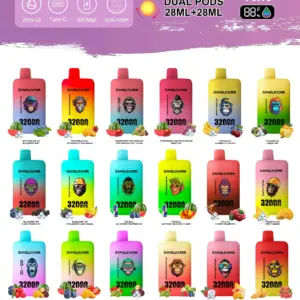
Fifteen flavours is the selling point and also the stocking problem: a shop that wants the whole range visible is committing ten pieces per flavour position, which is a hundred and fifty pieces of stock before a single display box is opened. One carton is a hundred pieces, so the range does not fit a single carton at one of each and still leave depth. The practical approach is to start with the flavours you know move and add depth to the ones that prove themselves, rather than filling the shelf evenly on the first order. The artwork does the work of drawing the eye at that point; the rest is depth control.
The Airmez Tornado 25K is manufactured by Airmez. Every specification above is taken from our own product record for this SKU and from the description our own team wrote for it, not assembled from other shops’ pages — which is why the sections on disputed figures read the way they do. Several other models sit above it in the range, and the EU warehouse category is the place to compare them.
Additional information
| Flavors | strawberry watermelon, kiwi passion fruit guava, blueberry on ice, peach mango, strawberry ice, mixed berries, lush ice, grape ice, peach ice, berry lemonade, dragon fruit ice, lemon & lime, triple berry, cherry, sour apple |
|---|