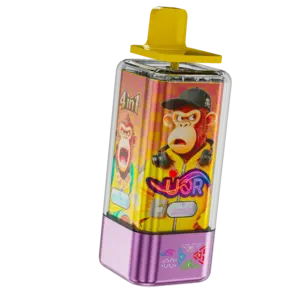


VAPEN Duo 40K Puffs
In Stock
Original price was: €16.12.€11.12Current price is: €11.12.31% OFF
You save

We ship your order quickly and reliably with
DHL, including
tracking.
The exact delivery time depends on the warehouse status (EU warehouse / international warehouse).
描述
I have spent the last three weeks carrying one of these and deliberately leaning on a single side of it, because that is the only way to find the thing this page is really about: the two tanks do not empty at the same time, and the listing does not tell you that. I finished the strawberry watermelon half well before the lemon lime half, and for two days the device behaved perfectly while looking, to anyone watching, like it was running out of something. Across the next nine sections I cover what the VAPEN Duo 40K puffs actually are, how the twist between the two chambers works, which figures our own specification sheet records for this device and which one it does not, how to read the level display when one side is ahead of the other, and what a display box and a carton contain if you are restocking it.
What one VAPEN Duo 40K actually is, and what comes with it
It is one sealed device with two separate tanks inside it, each holding its own flavouring, and a mouthpiece you turn to choose which tank feeds the coil. That is the whole idea, and the distinction matters more than it sounds: this is not one tank with two mesh coils in it, and it is not a device that blends the two halves together. You are on one flavour or the other, and you change your mind by twisting rather than by pressing anything.
The body is finished in a two-tone mould with a metal trim, the airflow is adjustable underneath, and there is an RGB light that comes on as you draw. The listing records the whole thing at approximately 120 g per piece, which is heavy for a device this shape and is the first thing you notice in a pocket.
| What the listing records | Where that leaves you |
|---|---|
| Two tanks, one body, twist to change sides | You carry one object and still get two flavours, which is the reason to buy this shape at all |
| Dual mesh coil, recorded at 1.0-ohm | Mesh spreads heat across the wick instead of concentrating it, so the two sides taste the same at the start and at the end |
| Sealed, no refilling | You cannot top up the side you like more, and you cannot add a third flavour. What is in it when it arrives is what you get |
| Type-C charge port | Any Type-C cable you already own will fit, so this is not a device you have to buy accessories for |
| No spare coil, no spare tank, no cable in the box | Nothing to maintain and nothing to lose, but also nothing to replace — when the liquid is gone, the device has finished |
The twist, and why the two tanks are kept apart
Two chambers inside one shell only works if the halves stay separated. That is the engineering problem with this format, and it is worth knowing that it is a real one: the widely reported failure of two-tank devices is crossover, where residue from one side works its way into the other and both halves start tasting of the same muddle. VAPEN’s answer is a sealed chamber per flavour with its own wick and its own coil, so the only liquid reaching the coil is the one you selected. The shop’s own listing describes each chamber as feeding its own mesh coil, and that separation, not the twist itself, is what makes the twist worth having.
Draw activation, and nothing to press
Nothing on this device needs pressing. You draw, and it responds, which is why the twist is the only control a new owner has to learn: pick a tank, draw, and repeat. An experienced user has nothing to fiddle with between puffs, and a beginner has exactly one action to remember.
What comes with the device, and what does not
The listing records a sealed device and nothing else — no spare coil, no separate tank, no charging cable, and no pod to swap. Everything is inside the one piece. If you want a second flavour pairing, that is a second device rather than a second cartridge, which is the honest trade-off of this design and the reason the twelve pairings below matter so much when you choose.
The VAPEN Duo 40K specification, and what each figure is based on
This is the section that matters most, because this device’s specifications are not equally solid. Some are stated plainly in VAPEN’s own material and repeated everywhere; one is stated in our listing but contradicted by other sellers; and one is not recorded anywhere we can verify. Splitting those three cases apart is more useful than printing a single confident table, so the middle column below says which kind of figure each one is.
| Item | Figure this listing records | What kind of figure it is |
|---|---|---|
| Puff count | Up to 40,000 puffs | Stated by the brand and repeated on every listing checked, including this one. It is a brand figure, measured under conditions the brand sets |
| Battery capacity | 650 mAh | Stated by the brand and consistent everywhere. A capacity, not a runtime — how long it lasts depends on how you draw |
| Nicotine strengths offered | 2% and 5% | Stated by the brand. Which one a given device holds is set by the variation you choose |
| Coil resistance | 1.0-ohm dual mesh, as our listing records it | Contested. Other sellers state 0.6-ohm, and the brand’s own material does not state an ohm figure at all. This page gives you the figure our listing carries and does not dress it up as a brand specification |
| Charging port | Type-C | Stated by the brand and consistent everywhere |
| Display | Oil and battery level display | Stated by the brand, and the shop’s own listing adds that the readout covers both tanks separately |
| Airflow | Adjustable, at the base | Stated by the brand and consistent. Mentioned by nearly every seller and explained by none |
| Flavour format | 12 dual-flavour pairings | Confirmed against this shop’s own variation list, which carries twelve pairings |
| Weight per piece | Approximately 120 g | Our listing’s own figure. Heavier than most devices this size, because there are two chambers inside it |
| E-liquid volume | Not recorded | Genuinely not stated anywhere we can stand behind. See the heading directly below |
| Charge time | Not recorded | Not stated in our listing. One seller quotes a time; we cannot confirm it, so it is not repeated here |
Why the e-liquid volume is missing from this page
Every other seller of this device states a liquid capacity, and they do not agree. The figures in circulation are 36 ml, a total of 40 ml split into two 20 ml tanks, and one listing at 11 ml per side. One seller’s page manages to state two of those at once — 36 ml in its table and 20 ml per tank in its body copy. The brand’s own material that we could retrieve says dual tanks and 40,000 puffs and gives no millilitre figure at all.
So we are not printing one. A number picked off another seller’s page would be a guess with a decimal point on it, and if it were wrong it would be the kind of wrong that costs you a return. Our specification sheet does not state the e-liquid volume for this device, so confirm it before ordering if the capacity is what decides it for you. This is also why the next section talks about how a two-tank device behaves rather than about how many millilitres are inside it: without a capacity, any run-time figure would be invented.
The coil figure, and why it is not called a manufacturer figure
Our listing records dual mesh coils at 1.0-ohm, and that is the figure this page gives you, because it is the figure the shop sells the device against. It is worth being straight about the state of the evidence, though. Other sellers specify 0.6-ohm mesh coils per chamber, and the brand’s own pages retrieved for this listing describe a dual mesh coil without giving an ohm figure at all. Two figures are in circulation and the brand does not settle it. If coil resistance is the deciding factor for you, treat 1.0-ohm as what this listing records rather than as a number the brand has confirmed.
The battery figure, and what it does not tell you
650 mAh is a capacity, and a capacity on its own does not convert into a number of hours or a number of puffs. What it tells you is the shape of the device’s day: the cell holds enough to be drawn on repeatedly between charges rather than needing a cable every few hours. Because the liquid volume is not recorded, we cannot tell you how many charges the device needs across its whole life, and anyone who gives you that figure for this device is working from one of the contested capacities above.
How to switch between the two flavours, twist by twist
Rotation is the mechanism, and it comes from the shop’s own listing rather than from a competitor page — which matters here, because the wider market does not agree with itself about it. Our listing’s short description says you switch with a simple twist of the mouthpiece, and the body copy describes a rotating mouthpiece. Most published material for this device agrees. One seller describes a side slider instead, which contradicts both the brand and everybody else, and looks like a description that has drifted onto the same page as that shop’s separate airflow control.
Because the disagreement is real, it is worth seeing exactly where each claim comes from before you take any of them on trust:
| Where the claim comes from | What that source says you do | How much weight it carries |
|---|---|---|
| This shop’s own listing for the device | A simple twist of the mouthpiece; a rotating mouthpiece | The source this page follows, because it is the description the shop sells the device against |
| The brand’s own product material | Twist to switch; a rotating chamber | Strong, and it agrees with our listing |
| Most independent sellers | Rotate the top; turn the mouthpiece to the other side | Consistent with the two above, so the majority position is clear |
| One seller’s page | A slide switch or a side selector | Treated here as an error rather than repeated. That same page also sells a separate airflow slider, which is the likely source of the mix-up |
What that means in practice is that the switch is physical and instant. You are not cycling through a menu, holding a button, or waiting for the device to change state. You turn the top, and the next draw comes from the other tank. There is nothing to confirm on the display first, and nothing to hold in a particular position while you draw.
Twisting from one side to the other
A half turn is the useful mental model rather than a specification: the mouthpiece has two positions, one per tank, and you move between them. Nothing else on the device changes when you do, which is why it is easy to do one-handed and easy to do without looking. The one habit worth building is to check the level readout after twisting, so you know which side you have just selected.
Why the two halves do not bleed into each other
Each tank has its own wick and its own mesh coil, and only one of them is being heated at a time. That is the design answer to crossover. Practically, it means that alternating between two flavours through the day does not produce a third blended flavour sitting in the background — the pairing you chose is the pairing you taste, and each half stays what it was. This is the single strongest argument for this format over carrying two separate single-flavour devices, and it is the thing buyers most often assume is impossible until they try it.
When one side empties before the other
It will, and sooner than people expect. Each chamber drains according to how often you choose it rather than on any schedule, so a pairing where you clearly prefer one half means that half runs out first. The device does not stop when that happens — it keeps working, because the other tank is still full, and the draw simply changes. The tell is that one flavour starts tasting thin or slightly dry while the other is still normal. At that point you have two choices: switch across and use the remaining tank on its own until it is done, or accept that the pairing is finished as a pairing. What you should not do is keep drawing hard on the empty side expecting it to recover; there is nothing left in it to recover.
The twelve pairings, and how to pick one
There are twelve, and each one is two flavours rather than one. That makes choosing harder than choosing a single flavour, because you are committing to a relationship between two tastes rather than to a taste. The list below is the shop’s own variation list, with the two halves separated so you can see the contrast you are actually buying.
| Pairing as the database lists it | First half | Second half |
|---|---|---|
| strawberry watermelon & lemon lime | Strawberry watermelon — soft, sweet, two fruits together | Lemon lime — sharp and clean, the opposite edge |
| strawberry banana & watermelon ice | Strawberry banana — rounded and creamy | Watermelon ice — melon with cooling behind it |
| strawberry ice & skittles | Strawberry ice — fruit with a cold finish | Skittles — mixed candy sweetness |
| strawberry kiwi & cola ice | Strawberry kiwi — tart fruit, slightly sharp | Cola ice — fizzy and chilled |
| blueberry ice & double apple | Blueberry ice — deep berry with cooling | Double apple — crisp apple, no cooling at all |
| triple melon & white mamba | Triple melon — broad, sweet melon blend | White mamba — darker, softer fruit |
| blueberry raspberry & grape ice | Blueberry raspberry — two berries, sweet and tart | Grape ice — sweet grape with cooling |
| mixed berries & peach ice | Mixed berries — a punch rather than one fruit | Peach ice — soft peach, chilled finish |
| kiwi passion fruit guava & cool mint | Kiwi passion fruit guava — tropical and tart | Cool mint — clean and cold, the least sweet half on the list |
| watermelon ice & cherry bomb | Watermelon ice — cold melon | Cherry bomb — sweet cherry, louder than the melon |
| pineapple coconut & raspberry watermelon | Pineapple coconut — creamy and rounded | Raspberry watermelon — tart berry against melon |
| love 66 & mango bomb | Love 66 — sweet melon, the hookah-style profile | Mango bomb — ripe tropical mango, heavier |
Three ways to decide, all of them based on how the halves sit against each other rather than on which flavour sounds nicest:
- Pick a contrast, not two favourites. The reason to own two tanks is the change between them. A pairing with one cooled half and one plain half gives you a bigger shift than two sweet fruits, and the shift is what stops you noticing the flavour at all after a few days.
- Check whether you actually like both halves. Your less-preferred side still has to be vaped — the device holds both, and whichever one you neglect drains slower rather than disappearing. If one half of a pairing is a flavour you would not choose on its own, you have bought a device that is half filler.
- Think about the order you use them in. A cold side followed by a plain one reads as a change; the same two in the opposite order can read as the second one being flat by comparison.
What 40,000 puffs means when the liquid is split in two
40,000 is the figure for the device, not for each flavour. There are two chambers and one advertised total, so whatever capacity the device actually carries is divided between them, and each half therefore covers less than the headline number suggests. Nothing is broken when that happens; it is simply how a two-chamber device is built, and it is the point most listings leave out.
How much less is a question this page cannot answer precisely, because the e-liquid volume is not recorded — see the specification section above. A competing editorial source states the general rule for the format as each flavour lasting roughly half as long as it would in a single-flavour device with the same puff count. We are repeating that only as a description of the format and not as a measurement of this device, because a measurement is exactly what nobody has published.
Why each flavour covers less than the headline number
Two tanks under one 40,000-puff headline means the headline is shared. If you use both sides evenly, each of them covers roughly its own share of the total; if you lean on one side, that side covers more and the other covers less. Either way, the number on the box describes the device’s whole life rather than the life of either flavour inside it, and reading it as “40,000 puffs of the flavour I like” is the most common misunderstanding about this format.
What the split does not tell you
It does not tell you how many puffs one tank holds, because neither the shop’s specification sheet nor the brand’s own material states a millilitre figure for either chamber. Any page quoting you a precise per-flavour puff count for this device is doing arithmetic on one of the contested capacities. The honest position is: the device lasts a long time, each flavour covers part of that, and how much of a part depends on how evenly you use the two sides.
This device against the two ways of buying two flavours
If the reason you are looking at a two-tank device is simply that you want two flavours available, there are three ways to get there and they are genuinely different purchases rather than three prices for the same thing:
| Approach | What you carry | Where the liquid and the charging go |
|---|---|---|
| One single-flavour device, 40,000 puffs | The lightest option of the three | One reservoir, one coil, one charge routine. A single taste for as long as the device lasts, and no change partway through |
| Two separate single-flavour devices | Two objects, and two sets of everything if you want both with you | Each flavour gets a full reservoir of its own, so neither covers less than its headline figure. Two batteries to keep charged |
| This device: one body, two tanks | One object, at approximately 120 g, which is heavier than either alternative because both chambers are inside it | One cell and one charge routine, and the advertised capacity is shared between the two flavours rather than dedicated to one |
The trade is therefore clear rather than hidden: you carry one object and charge one battery, and in exchange each flavour covers less than a device’s full advertised life. If you would rather each flavour have a complete reservoir, two separate devices do that better. If you want to stop carrying two things, this is what that costs.
Living with two tanks: reading the levels, charging and keeping it running
A two-chamber device gives you an extra piece of information and an extra thing to misread. The display reports on the device’s oil level and battery, and the shop’s own listing notes that the readout covers both tanks and the battery rather than giving you one combined figure. That is genuinely useful and it is also where most confusion about this format starts, because the two sides are not moving in step.
| Side of the device | How full it is | How the draw responds |
|---|---|---|
| The side you draw on most | Falls first, and falls faster than you expect | Normal until it is nearly done, then thinner and slightly dry at the end of a long draw |
| The side you neglect | Barely moves, which can read as the display being wrong | Unchanged, because it is not being used. The display is right; your two halves are simply not being used equally |
| Both sides low | Both readouts near the bottom | Weak and flavourless on both, regardless of charge. Charging will not restore a tank that has nothing in it |
| Battery low, tanks fine | Level readouts normal | Vapour drops away and the light dims before either flavour changes. That is the battery, not the liquid |
| Battery fine, one tank low | One side clearly lower than the other | One flavour is normal and the other is thin. Switching sides settles it — this is the case people most often mistake for a fault |
Reading a two-chamber level display
The rule that saves the most confusion: the two halves are independent, so a gap between them is information rather than a defect. If one side is visibly lower, that is a record of your own habit, not a sign that the device has developed a problem. The genuinely diagnostic reading is a change — a side that drops far faster than the amount you have been drawing from it, which is worth watching. A steady, unequal pair of levels is simply how a two-tank device looks after a week.
Charging, and the one thing not recorded
Charging goes through the Type-C port and the device is rechargeable, which is what makes a 40,000-puff device practical rather than a curiosity — the cell can be topped up repeatedly across the device’s life rather than being a single-use part of it. What our listing does not record is how long a full charge takes. One seller quotes a figure; we cannot confirm it, so we are not printing it. Plan on charging it while you are doing something else rather than on a precise number of minutes.
The habit worth keeping is to put it on charge before the cell is completely flat rather than after. A battery that is repeatedly run to nothing and then drawn on hard is being asked to work at the edge of what it can hold, and the practical symptom is vapour that fades well before the display says empty.
Keeping a two-tank device in good order
None of this is servicing the device requires — it is sealed and has no user-serviceable parts — but these are the habits that separate a unit still tasting clean at the end from one that goes flat early:
- Keep it upright between uses. A device with two liquid chambers lying on its side is asking its seals to hold liquid away from the airflow path for hours at a time.
- Heat is the one thing to keep it away from. A sealed device left on a sunny windowsill or in a parked car changes behaviour with no warning on the display at all.
- Do not chain-draw it. Back-to-back long draws keep the mesh hot and the wick struggling to keep up, and the taste thins out before the liquid does. A pause between draws costs nothing.
- Clean the port and the airflow opening with a dry cloth or a soft brush. Lint in the airflow is a common cause of a draw that suddenly feels tighter for no reason.
- Use the twist rather than forcing it. It is a two-position mechanism, not a dial. If it will not move, you are already at one of the two ends.
Where this page sits against the other VAPEN Duo listings
You will find this device on several sites, and the differences between those pages are not cosmetic. Three points are worth knowing before you compare them.
| Point of difference | What other listings say | What this page does instead |
|---|---|---|
| How the flavours are switched | Most say rotate the mouthpiece; one describes a side slider or selector | Follows the shop’s own listing and the brand: rotation. The slider description is treated as an error rather than repeated |
| E-liquid capacity | 36 ml, 40 ml across two tanks, 11 ml per side, or two figures on one page | States none of them, and says plainly that it is not recorded here |
| Coil resistance | 1.0-ohm on some pages, 0.6-ohm on others, absent on the brand’s own | Gives the 1.0-ohm our listing records and labels it as a listing figure, not a confirmed brand figure |
| What “dual” refers to | Used loosely for both two-tank devices and two-coil single-tank devices, which are different products | Says which one this is: two separate tanks, each with its own coil |
| Uneven tank drain | Not addressed anywhere in the listings checked | Explained as expected behaviour, with the reading that actually signals a problem |
| Charge time | One listing quotes a specific duration | Says it is not recorded rather than repeating a figure we cannot confirm |
If you are comparing this device against a single-flavour 40,000-puff device, the difference is not the puff count — it is that this one gives you a change partway through a long device’s life. If you are comparing it against two separate single-flavour devices, the trade is that you carry one object instead of two, and that each flavour here covers part of a shared capacity rather than having a full one of its own.
If you want the same brand’s single-flavour devices instead, they live under VAPEN disposable vapes, and the rest of this capacity band sits in our 40k puffs selection.
Questions buyers ask before ordering a two-tank device
Can I switch between the two flavours as often as I like?
Yes, and there is no cost to doing it. The twist is mechanical and the two tanks are separate, so moving between them as often as you want changes nothing except which chamber is feeding the coil. Nothing wears out from switching, and no flavour is lost in the change.
Can I refill either tank, or add a third flavour?
No. The device is sealed and the listing records no refill route and no replaceable pod, so the two flavours it arrives with are the two it finishes with. That is the main structural difference between this and a refillable pod kit: nothing to top up, and nothing to change your mind about later.
Why does one flavour seem to run out before the other?
Because each chamber drains according to how often you choose it rather than on a fixed schedule. Whichever half you prefer gets used more, so it empties first while the other side sits nearly full. It looks like a fault and it is not one — the display is telling you the truth about an uneven habit. The point at which it is worth paying attention is a side dropping much faster than the amount you have been drawing from it.
Which combination has the least cooling?
Of the twelve, blueberry ice & double apple is the one where the two halves differ most clearly on cooling: the apple half is listed plainly with no cooling term at all, while the blueberry half is the iced one. The combination with the most cooling across both halves is kiwi passion fruit guava & cool mint, where the mint half is the coldest item on the whole list. Note that these are readings of the names on the shop’s own variation list, not taste notes from a manufacturer specification.
Does the twist change anything besides which flavour comes through?
No. It selects the tank. The airflow is a separate adjustment at the base of the device, and it is the control that changes how open or tight the draw feels. If the draw has changed and the flavour has not, you have moved the airflow rather than the mouthpiece.
Is the coil resistance the same in both tanks?
Our listing records dual mesh coils at 1.0-ohm for the device, and describes each chamber as feeding its own mesh coil, which is why the two halves taste consistent with each other. It does not state a separate resistance figure per chamber, and the brand’s own material does not give an ohm figure at all, so this page does not claim a per-tank value either.
Ordering more than one: what the packaging actually contains
For shops and resellers, the packaging figures are the ones that decide the order, and they are recorded on this listing rather than inferred:
What a display box and a carton each contain
| What ships | How many go in it | What it weighs or measures |
|---|---|---|
| One piece | 1 device | Approximately 120 g |
| Display box | 10 pieces | Approximately 1,252 g for the box |
| Carton | 200 pieces | Approximately 26.8 kg gross, in a case measuring 66 x 36.5 x 26.5 cm |
The carton is a stackable, standard-sized case rather than an oversized one, and the display box doubles as counter presentation, so a shop can put ten out and keep the rest boxed without repacking anything.
Restocking a line like this
Two things about this device shape affect how a line like it sells. The first is that twelve pairings means twelve decisions for a customer, which is a selling advantage but also means the fastest-moving pairings will be the ones you run out of first — worth rotating the counter stock rather than leaving the same ten out. The second is that a two-flavour device sells to somebody who is bored of a single flavour rather than to somebody who has run out of one, so it tends to move alongside single-flavour stock rather than against it.
Order volumes are confirmed at checkout, and the price for larger quantities is handled there as well rather than in this listing. If you are stocking several VAPEN lines at once, this device sits in the same 40,000-puff band as the brand’s single-flavour devices, and the pairings are the part of the line that turns over fastest because a customer picks a combination rather than a single taste.
Additional information
| Flavors | strawberry watermelon & lemon lime, strawberry banana & watermelon ice, strawberry ice & skittles, strawberry kiwi & cola ice, blueberry ice & double apple, triple melon & white mamba, blueberry raspberry & grape ice, mixed berries & peach ice, kiwi passion fruit guava & cool mint, watermelon ice & cherry bomb, pineapple coconut & raspberry watermelon, love 66 & mango bomb |
|---|---|
| Strength | 2%, 5% |