


BANG Leader Tiger Design 20000 Puffs
In Stock
El precio original era: €9.99.€8.67El precio actual es: €8.67.13% OFF
Ahorras

Enviamos su pedido de forma rápida y fiable con
DHL, incluido
seguimiento.
El plazo de entrega exacto depende del estado del almacén (almacén en la UE / almacén internacional).
Descripción
Three weeks with the Tiger, and what this page can actually confirm
I carried one of these BANG Leader Tiger Design 20000 Puffs devices for three weeks and kept the second unit in its box as a control, so that the print on the shell, the fill level and the charge behaviour could be compared against something untouched rather than against memory. Before that I read what a trade buyer reads: the specification block the shop itself publishes, the packing sheet behind it, and the independent listings that sell the same model.
What follows is what those three weeks and that paperwork actually support. It is not a manufacturer page and it does not repeat a manufacturer promise. Where the shop’s own data is silent, this page says so and moves on, because a specification that is left out is a gap a buyer can see, while a specification that is guessed is a return waiting to happen. Three things in particular could not be settled from the shop’s own material, and they are named here rather than buried: whether the unit carries a level or battery display, whether the airflow can be adjusted, and what nicotine content the shop holds. None of the three is claimed anywhere below.
Everything else is here: what arrives in the parcel, what each printed figure changes once the device is in your hand, what the 28 ml reservoir is really worth at your own daily pace, how the twelve flavours divide, how to look after the cell, and which of the larger BANG Leader models this one is and is not a substitute for.
How the testing was done, and its limits
One device, three weeks, roughly 300 draws a day, carried loose in a jacket pocket and charged from a laptop port. The second unit was opened once at the end to compare the artwork and the fill against the worked one. That is enough to speak about feel, about charging rhythm and about how the flavour holds up towards the end of a fill. It is not enough to certify a draw count, and no page — this one included — can certify a draw count from a single unit. The published arithmetic in the section below is the honest substitute.
What this page cannot confirm
Trade listings for this model routinely describe a battery-and-liquid display and an adjustable airflow slider. The shop’s own material describes neither. Rather than repeat a competitor’s feature list, this page records the disagreement and treats both as unconfirmed. If either matters to you, ask before ordering — that question is answered in the FAQ below.
What comes with one device
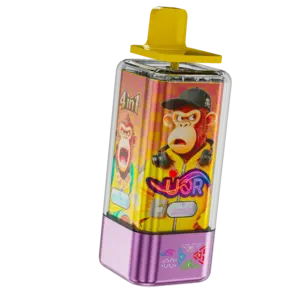
The device is a clear-shelled, draw-activated unit with the tiger artwork sealed under the outer face. The cell is built in and topped up through a Type-C port on the base; the reservoir is filled at the factory and is not opened by the buyer. That is the whole of the hardware — there is no pod to seat, no coil to prime and no button to find.
One detail is worth stating plainly because it decides whether the device is usable on the day the parcel lands: the charging lead is not part of the unit. The shop’s own material lists the port, not a lead, and the pack contents are the device and its packaging.
| Item | What the shop states | What you handle yourself |
|---|---|---|
| The device | One pre-filled BANG Leader 20000, tiger design, draw-activated | Nothing. It works out of the wrapper |
| The cell | 13400 format cell, 650 mAh, built in | Charging it when it asks — one lead, no adapter supplied |
| The reservoir | 28 ml, sealed at the factory, one flavour per unit | Nothing. There is no fill port to open |
| The charging lead | Not listed | Supply your own Type-C lead |
| Printed paperwork | Not listed | Keep the pack until you have checked the unit over |
| Store packing | 200 pieces per carton, 65 x 31 x 26 cm, approx. 18 kg gross | Relevant to trade orders only — see the last section |
The shell, and why the artwork matters more than it sounds
The print sits under a clear acrylic face, so it is not a sticker that lifts at a corner after a fortnight in a pocket. Buyers mention this specifically — one review of this exact model describes the tiger finish as looking solid rather than cheap, and another simply says the design is why they picked it over the plain version. On the bench the shell has a slight boxiness in the hand and takes a knock without showing it.
What the printed specification actually says
Every figure below is the one this shop publishes for this model. The middle column is the published value; the right-hand column is what that value changes once the device is in daily use, which is the part a plain data table leaves out. Where the wider market prints something different for the same line, the difference is named here rather than in a separate section, so that one number is never read in two places.
Reading the table
Two of the rows carry a disagreement with other listings — the battery line and the coil line. Both are printed here as the shop states them, with the trade-page version noted, and both are then explained in the section that follows. Nothing in the table is a manufacturer guarantee; the draw figure in particular is a rating, and the section after next turns it into days.
| Parameter | What this page states | What changes in the hand |
|---|---|---|
| Draw rating | Up to 20,000 draws | A rating, not a promise. Plan on less; the arithmetic is two sections down |
| Liquid | 28 ml, sealed | Nothing to top up, nothing to spill, and one flavour for the whole life of the unit |
| Cell | 13400 format, 650 mAh | Charged rather than replaced — see the cell format note below |
| Cargando | puerto Type-C | Any standard lead fits; the lead itself is not in the box |
| Bobina | Mesh coil, 1.0 ohm | A gentle draw with a full flavour; most trade pages print this line as dual mesh |
| Activation | Draw-activated | No button to press and no lock to remember |
| Peso de la unidad | Approx. 90 g | Noticeable in a shirt pocket and comfortable in a jacket, so it travels in a bag rather than a trouser pocket |
| Sabores | 12, one per unit | The choice is made once, at order time — grouped by profile further down |
| Display and airflow | Not stated by this shop | Some trade pages claim both. Treat them as unconfirmed and ask if they matter |
| Trade SKU | Bang-leader-20K-DE | The string to quote if you are ordering for a shop |
The 13400 cell format, and why the capacity figure is 650 mAh
The battery line reads 13400 / 650mAh, and it is the line most often misread. The number before the slash is a cell format — a size code, in the way that 18650 is a size code — while 650 mAh is the electrical capacity. Some listings present the figure so that it can be taken for 13,400 mAh; that cannot be right, because 13,400 mAh would need a cell several times the size of a 90 g pocket device. Read it as: this format of cell, holding 650 mAh. One qualification is worth adding, because it comes up whenever this line is researched: the common cylindrical format at this capacity is usually written 13450, and 13400 may be a shortened form of it rather than a separate cell. Either way the capacity is the figure that matters here, and this page does not treat the code as a chemistry claim.
The 1.0 ohm mesh, and where the dual-mesh claim comes from
This shop’s own data says a mesh coil at 1.0 ohm, singular. Across the listings checked for this page, malla doble appears more often than not, and a handful go further and print 0.8 ohm. That is a real difference rather than a wording one: a second mesh and a lower resistance change how hard the device works and how quickly it drinks the reservoir. Because the shop’s own specification is the authority for this listing, this page states mesh at 1.0 ohm and notes that the trade pages differ. What you actually notice at 1.0 ohm is a gentler draw with a fuller flavour and a reservoir that lasts longer than a harder-hitting coil would allow — the trade-off is cloud volume, not flavour quality.
How the cell, the coil and the liquid share the work
Three things have to run out together for a high-capacity disposable to feel well built: the liquid, the cell and the coil. On a poorly balanced unit the cell dies first and the buyer spends the last third of the reservoir tethered to a lead. Here the 650 mAh cell is small on paper and the 28 ml reservoir is large, which sounds like the wrong way round until the recharge is taken into account — the cell is topped up, so it only has to beat one fill at a time, while the reservoir can only be emptied once.
How a draw actually works
Drawing on the mouthpiece closes a pressure switch. The cell feeds the mesh, the mesh heats, and the liquid sitting against it turns to vapour. There is no chamber to prime and no wick to keep wet by hand, because the mesh sits in contact with the reservoir, which is why the flavour stays even from the first draw to the last rather than improving or fading over the first dozen. A mesh rather than a wound wire spreads that heat across a wider surface, and that is the reason a 1.0 ohm coil still delivers full flavour at a gentle draw.
Which of the three runs out first
The liquid, and the cell is not close. The cell in this format is rated for several hundred full charges before it degrades meaningfully; the reservoir is emptied by somewhere between twenty and forty of them, so the cell is still near the start of its life when the unit is finished. The coil sits between the two: it holds up across a fill, but output does thin towards the end, which is why the flavour fade described below is a liquid story rather than a coil failure. The practical consequence is that a recharge which seems to give fewer draws than the last one is usually the reservoir emptying rather than the cell tiring, so charge when the device asks and do not read the shortening as a fault.
What the puff count is worth in your week
A draw rating is measured, not experienced, and on this device the printed figure and the physical reservoir disagree. Manufacturers count with a machine taking draws of about one second; most people take draws two to three times that long, and a longer draw pulls more liquid. Independent bench testing of disposable devices is blunt about the result: one ISO-style test measured 1,200 real draws against 2,100 claimed — 57 per cent — and published analysis puts consumption at roughly 200 to 300 draws per millilitre at short-draw settings. Twenty-eight millilitres at that rate is 5,600 to 8,400 draws, not 20,000.
That is not a fault in this particular unit; it is how the whole category is rated, and it is why the planning figure below is built from the reservoir rather than from the number on the box. The 20,000 figure is left in the second column only so you can see the size of the gap.
| Daily draws | 20000 rated divides to | Plan for roughly | Is the cell or the liquid the limit |
|---|---|---|---|
| About 100 | 200 days of rated draws | 8 to 12 weeks from the 28 ml that is actually inside | The liquid, and the only thing that shortens it is storage heat |
| About 200 | 100 days | 4 to 6 weeks | The liquid; the cell wants a top-up every few days |
| About 300 | 66 days | 3 to 4 weeks | The liquid; a recharge is part of the routine |
| About 600 | 33 days | 10 to 14 days | Still the liquid, and charging is a daily job |
Where the arithmetic breaks down
Four things move a real device off the table. Longer draws pull more liquid per draw, and a four-second habit can nearly halve the total against a two-second one. As the reservoir empties the flavour thins before the device stops, so the last stretch feels finished earlier than the count suggests. A unit left in a hot car, or charged from a fast brick it was not designed for, will not reach its own number. And the published 200-to-300-draws-per-millilitre range is a range for a reason: the same reservoir can tip either side of it depending on draw length. The table is a planning tool, not a stopwatch, and the 5,600-to-8,400 band is what the evidence supports rather than a floor this page can guarantee.
One comparison is worth making, because it is the reason this format exists at all: at 600 draws a day this unit covers a fortnight from a single order, where a short-life disposable of a few hundred draws covers a day. The comparison is about how often you buy, not about anything else, and the care section further down sets the two side by side.
The twelve flavours, and how to choose between them
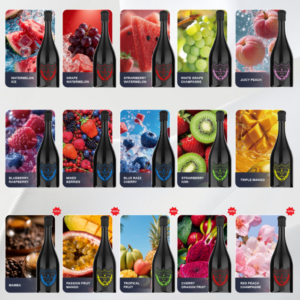
Twelve flavours is enough choice to be a problem rather than a feature if they are simply listed. They divide into three groups on the one question buyers actually argue about — how cold the finish is and how sweet the centre is. The grouping below comes from the tasting notes sellers publish per flavour, cross-checked against the two buyer comments that mention sweetness directly: one describes the flavour as balanced and not oversweet, and another singles out Mango Peach as a touch sweeter than they wanted. Two flavour names that appear run together on some stock lists are written out properly here.
| Group | Flavours in it | What to expect |
|---|---|---|
| Ice-led | Watermelon Ice, Strawberry Ice, Blueberry Ice, Peach Ice, Grape Ice | A cool finish on every draw. The fruit sits clearly underneath rather than hidden, and the chill does not fade as the fill empties. The safe group if you want the same taste on the last day as on the first |
| Fruit-forward | Strawberry Kiwi, Strawberry Watermelon, Mango Peach, Blueberry Raspberry | Two fruits in the same draw, warmer and rounder than the ice group and the ones that reward a longer, slower draw. Mango Peach is the sweetest of the four, which is worth knowing if you already find fruit mixes too sweet |
| Sweet and candy-led | Mix Fruit, Watermelon Bubble Gum, Blueberry Mint | The sweetest end of the range. Mix Fruit is a blend rather than a single fruit and reads differently on different days; Watermelon Bubble Gum is the most obviously sweet of all twelve; Blueberry Mint cools without the full blast of the ice group, which makes it the useful middle option |
One recommendation, with the reason
If you have not used this model before, start with an ice-led flavour — Watermelon Ice or Blueberry Ice. The reason is mechanical rather than a matter of taste: the cool finish holds up as the reservoir empties, so the last week of the unit still tastes like the first. The sweet and candy-led group is the one that thins noticeably towards the end, and finding that out on your first 20,000-draw unit is an expensive way to learn it. Buy one, then buy the flavour you were tempted by.
Getting started, and the one setting that matters
There is very little to learn here, which is rather the point of the format. Unwrap it, take the small plug out of the charging port, and draw. The first draw is a little cooler than the ones that follow, because the mesh is still coming up to temperature; by the third or fourth draw the flavour has settled.
First steps
Charge it before the first fill is half gone rather than waiting for it to stop — the cell is happiest topping up from part charge — and draw at a steady pace rather than in long hard pulls, which is what shortens the total. Keep it upright when it is not in use so that the liquid stays against the mesh; a unit left on its side for a fortnight is the usual reason a first draw tastes dry.
The one setting, and what the device tells you
There is no power setting to choose and no mode to switch: draw strength is the only control, and it is your own. What the device tells you is limited, and this is where the unconfirmed display matters. The shop’s own material does not describe a level indicator, so on this listing you judge the end by the five signs in the care section below rather than by a readout. If a level display is something you rely on, treat it as a question for the shop rather than an assumption about the device.
Charging, storage and the end of the reservoir
The care this device needs is small, and almost all of it concerns the cell, because the cell is the only part that has to survive more than one fill.
Charging: what is normal and what is not
Charging from empty happens more than once, and that is the design rather than a fault. Independent bench testing of devices in this class found roughly 265 to 325 draws from a single charge, which puts a 28 ml fill at somewhere between about twenty and forty charges across its life. Treat that as the shape of the routine rather than a schedule: a top-up every few days at ordinary use, a daily one if you draw heavily. The cell itself is not the wear item here — comparable cells in this format are specified for several hundred full charges, so the cell is still well inside its life when the reservoir is empty.
Charge from a standard port, take the lead out once the device is full, and avoid leaving it plugged in overnight as a habit. A unit that has been on charge for an hour and still gives only a handful of draws is not a charging problem — it is the reservoir at the end of its fill. The one figure this page will not invent is a charge time in minutes, because the shop does not publish one and the listings that do disagree with each other.
Storage between uses
Upright, at room temperature, out of direct sun and away from a hot car interior. Heat is the one thing that genuinely shortens a sealed unit’s life, because it works on the liquid as well as on the cell. Cold slows the liquid and makes the first few draws thin; it recovers once the unit is back at room temperature, so a cold unit is not a damaged one.
Five signs the fill is finished
The device does not stop cleanly, so watch for these in order. The flavour thins before it disappears. The vapour gets lighter on the same draw length. The taste turns dry or faintly papery. A recharge that used to give a day now gives an hour. And finally a draw produces nothing at all. Once the first two appear together the unit is in its last stretch; once the fourth appears it is done, whatever the draw counter in your head says.
| At the end of its life | This 20,000-draw unit | A short-life disposable |
|---|---|---|
| How long a unit covers | Weeks from one order at ordinary use | Days |
| What you do when it runs flat | Charge it and carry on, repeatedly, across the fill | Nothing. It is finished |
| What you carry with you | One device and, eventually, one lead | Several units, or a trip to the shop |
| What ends it | The reservoir emptying, not the cell | Often the cell, with liquid still inside |
| The honest downside | Carried weight and a charging habit | You buy far more often, and the taste fades sooner |
Who this one suits, and how it differs from the bigger BANG Leader devices
This is the smallest single-flavour unit in the BANG Leader family: one reservoir, one coil, one taste and no switching hardware. The larger models in the same range add capacity and, from 32,000 upward, a second flavour chamber with switching. That is the trade you are making — the 20,000 is the version you do not have to think about.
| Modelo | What is different about it | Who it is for | Why I would not choose it here |
|---|---|---|---|
| Tiger Design 20,000 (this page) | One 28 ml reservoir, one 1.0 ohm mesh, 650 mAh cell, no switching | One flavour you already know, carried every day, one decision at order time | Nothing — this is the model the rest of the table is measured against |
| BANG Leader 32,000 | A second flavour chamber with switching, and roughly twice the rated draws | Two flavours in one device, and buyers who tire of a single taste | Not if you want the simplest object and the smallest one to carry |
| BANG Leader 45,000 and 50,000 | Two flavour chambers, and a display screen on the larger of the two | Heavier daily use, and buyers who want to see the remaining level | Not for a first high-capacity device, or for a pocket |
| BANG Leader 80,000 three-flavour | Three chambers in one body, and usually a larger cell in this class | People who want a device to live on a desk rather than travel | Not if you carry it — the size is the whole point of that model |
How this fits into the rest of the range
If you want one flavour and the least hardware, this is the model. If you want two flavours in your hand without carrying two devices, go up one step. If what you actually want is to see how much is left, that is a reason to look at the larger units rather than to buy this one and hope. Every figure in the table above is the shop’s own published rating for that model, and the whole family sits on the same BANG Leader brand page, which is the quickest way to see the current line-up together.
Questions I get asked before someone orders
Will any USB-C cable do, or does it have to be a particular one?
Any standard Type-C lead will do. What matters is the source rather than the cable: charge from an ordinary port, and avoid a high-output fast-charge brick, which pushes current at a small cell faster than it was designed to take. A phone lead and a laptop port are the right combination.
Is there any way to refill the reservoir or replace the coil?
No. The reservoir is sealed at the factory and there is no fill port, and the coil is fixed inside the unit. Once the liquid is gone the device is finished, however much charge is left in the cell. That is why the flavour decision is made at order time, and why two minutes spent on the three groups above is worth it.
How do I check that a device is the genuine article when it arrives?
Check three things against this listing: the tiger print sits under the clear face rather than on top of it, the base carries the Type-C port described here, and the packaging states the model and the draw rating the same way this page does. The trade code in the specification table is the string to compare against if you are ordering in quantity. Anything that does not match those three is worth a question to the shop before you open the second unit.
How close is a single-flavour unit to the mixed-fruit flavour in the range?
They are not the same experience. A single-fruit flavour gives you the same draw every time, which is what most people want from a device they carry for weeks. Mix Fruit is a blend, and blends read differently as the reservoir empties because the components do not fade at the same rate. If consistency matters more than variety, stay with a named fruit.
Can I order a specific mix of flavours, or does it come as it comes?
Each unit holds one flavour, so a mixed order means mixed units rather than a mixed device. Ask the shop directly if you want a particular spread across a multi-unit order — that is a picking question, and it is better settled before the order than after it.
Do you supply shops in quantity, and how is a quantity order packed?
Yes. Trade orders go out as 200 pieces to a carton measuring 65 x 31 x 26 cm at approximately 18 kg gross, and the carton code for this model is in the specification table above. Ask for a stock check before you commit, because the flavour spread in a mixed carton depends on what is on the shelf that week. Smaller quantities of the same device sit on the 20K puffs range page.
Ordering this by the carton for a shop
Everything a buyer needs is above; this section is the counter side of the same device. The tiger shell is the reason it moves — customers pick it up off a shelf and ask about it — and the single-flavour format makes it the easy stock line next to the switching models, because there is no hardware to explain at the counter.
What a trade order covers
One carton carries 200 pieces at 65 x 31 x 26 cm and approximately 18 kg gross, and the unit weight is about 90 g per piece. The SKU to quote is Bang-leader-20K-DE. The figures on this page are the shop’s own published figures and the manufacturer’s ratings, repeated here so that a counter conversation and this page cannot contradict each other. Nothing here is a manufacturer guarantee, and the draw rating in particular is a rating rather than a measured commitment. Ask for current availability, the flavour split in a mixed carton and the batch details before you commit to a quantity — all three change between shipments.
Información adicional
| Sabor | hielo de sandía, kiwi de fresa, hielo de fresa, mango durazno, frambuesa de arándano, menta de arándano, mezcla de frutas, sandía de fresa, hielo de uva, chicle de sandía, hielo de arándano, hielo de durazno |
|---|---|
| Fuerza | 0%, 2%, 3%, 5% |





Pablo Martínez –
El sabor es claro y no se pierde rápidamente. La facilidad de uso resulta útil, no solo como un detalle visual.
Anna Kowalska –
El uso es predecible, sin interrupciones extrañas. La operación simple ayuda a evaluar mejor el estado del dispositivo.
Jonas Becker –
Lo he estado usando desde hace unos días. El sabor no es demasiado plano, y la pantalla hace que sea más fácil evaluar la batería y el uso.
Tim Hoffmann –
El comportamiento de la entrega es constante, y la operación sencilla es más que un extra. En general, una experiencia sólida sin grandes problemas.
Daan de Vries –
Cargar por Type-C es práctico y el aparato se siente sólido. No hubo problemas con la entrega.
Anke Willems –
Buena experiencia hasta ahora. La fácil utilización es de gran ayuda, especialmente cuando no quieres adivinar cuánto queda.
Pablo Martínez –
Lo he usado varios días y funciona de forma bastante constante. La pantalla ayuda a controlar batería y líquido.